
Your custom gate is a heavy-duty security asset, not just a decorative piece of iron. If you let maintenance slide, you’re inviting expensive rust damage and mechanical failure. We know the frustration of hearing a piercing squeak every time you pull into the driveway or worrying that a failing sensor might compromise your home’s safety. Understanding how to maintain a wrought iron gate is the only way to protect your investment and keep your property secure in the unique Los Angeles climate. Whether you’re dealing with salty coastal air or intense valley heat, your gate requires a specific brand of care to stay functional.
We’re sharing the professional secrets we’ve used for decades to keep custom ironwork looking brand new. You’ll learn a clear, actionable maintenance schedule that covers everything from safe cleaning products to lubricating high-traffic hinges. We’ll also break down the critical safety standards like the UL 325 edition and California Fire Code requirements so you know when a simple DIY fix is enough and when you need a pro. This guide gives you the expert knowledge to ensure your gate remains a reliable, rust-free barrier for your property. By the end, you’ll have the confidence to manage your ironwork like a seasoned veteran.
Key Takeaways
- Use mild detergents and low-pressure rinses to remove Los Angeles smog without stripping your gate’s protective finish.
- Master the exact steps for how to maintain a wrought iron gate against the dual threats of coastal salt and intense UV heat.
- Ditch generic lubricants in favor of silicone-based sprays to keep heavy-duty hinges and automatic tracks operating silently.
- Maintain your property’s security by keeping automatic sensors and safety loops clear of dirt, webs, and landscaping.
- Identify the critical signs of structural damage that mean it’s time to call in a licensed professional for restoration.
The Real Value of Wrought Iron Gate Maintenance
A custom wrought iron gate is a lifetime investment. It’s built for strength, but it isn’t invincible. Proactive care is the only way to prevent structural degradation and keep your property’s defensive line uncompromised. In Los Angeles, curb appeal translates directly to resale value. A pristine gate suggests a well-cared-for home, while a rusted one invites the “broken window theory.” Neglect signals that security isn’t a priority, which can inadvertently invite unauthorized access or property crime.
Learning how to maintain a wrought iron gate isn’t just about keeping things pretty. It’s about ensuring the heavy-duty components function exactly as they did on day one. When you prioritize upkeep, you’re protecting a high-end asset that defines your property’s perimeter. Iron Guys has seen how a few hours of annual attention can save thousands in emergency repairs later. A gate that works perfectly provides peace of mind that a neglected one never can.
Security vs. Aesthetics: Why You Need Both
Rust is a silent predator for security hardware. Over time, oxidation can weaken locking mechanisms and hinge points until they become brittle. A gate that looks imposing acts as a powerful psychological deterrent. It shows that the owner is vigilant and that the property is hardened against threats. Beyond looks, a silent and smooth-operating gate is a hallmark of a high-security home. Grinding hinges or rattling panels aren’t just annoying; they’re signs of mechanical fatigue that can lead to total failure of your entry system.
The Cost of Neglect
The math is simple. The low cost of regular cleaning and minor touch-ups is a fraction of what you’ll pay for full sandblasting and repainting. In coastal Los Angeles environments, salt air accelerates corrosion. Small paint chips allow moisture to reach the raw metal, starting a chain reaction. To understand why this metal behaves this way, it helps to know What is Wrought Iron and how its unique fibrous structure interacts with the environment. If left unchecked, surface rust turns into deep-seated damage. Structural oxidation is the point where iron loses its load-bearing integrity and becomes a safety hazard. At that stage, you aren’t looking at a maintenance bill; you’re looking at a full replacement.
Step-by-Step Cleaning and Surface Care
Cleaning your gate is the first and most critical step in learning how to maintain a wrought iron gate. In Los Angeles, your ironwork is constantly bombarded by vehicle emissions, dust, and coastal salt. These particles aren’t just ugly. They’re chemically active. If left to sit, they can eat through protective coatings and start the oxidation process. You don’t need a heavy-duty chemical lab to do this right. You need a methodical approach and the right materials.
The Right Tools for the Job
Avoid the temptation to use wire brushes or steel wool. These abrasive tools create micro-scratches in the paint or powder coating. Those scratches act as entry points for moisture. Stick to soft-bristle brushes and microfiber cloths. For soap, a mild, non-detergent dish soap is usually best. It breaks down grime without stripping the finish. If your gate features intricate architectural iron works with detailed scrollwork, a set of automotive detailing brushes will help you reach into tight corners without causing damage. These tools allow you to clear out grit without compromising the integrity of the finish.
The Cleaning Process: A Pro’s Routine
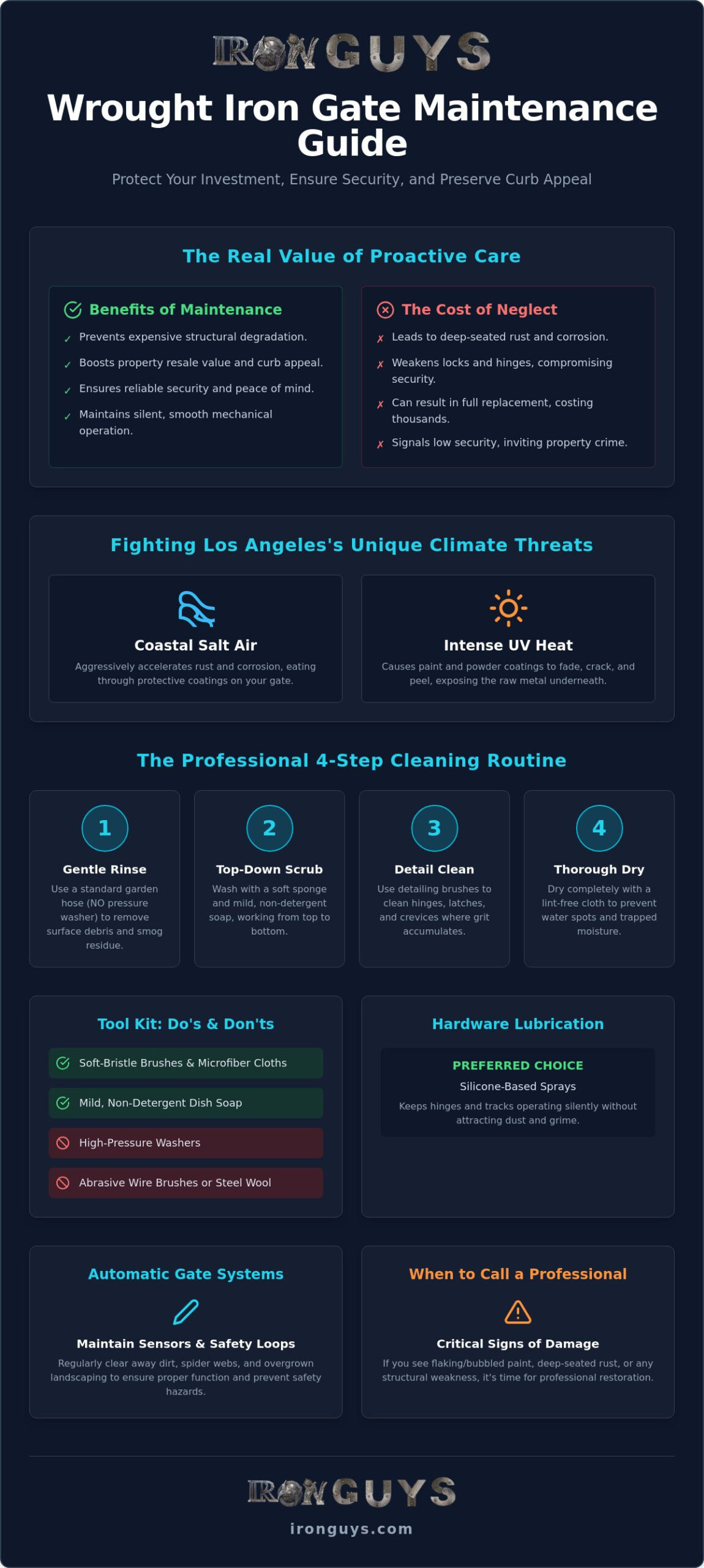
Start with a gentle rinse using a standard garden hose. Never use a high-pressure washer. High pressure can force water into sealed bearings or behind the paint layer, causing hidden rot from the inside out. Once the surface debris is gone, work from the top down with your soapy water. This prevents dirty runoff from streaking areas you’ve already cleaned. It’s a simple system that yields professional results every time.
Follow these four steps for a consistent routine:
- Step 1: Gentle rinse to clear surface debris and Los Angeles smog residue.
- Step 2: Top-down scrubbing with a soft sponge and soapy water.
- Step 3: Targeted cleaning of hinges, latches, and crevices where grit accumulates.
- Step 4: Thorough drying with a lint-free cloth to eliminate standing water.
The drying phase is where most homeowners fail. Taking the time to dry every scroll and corner is a vital part of how to maintain a wrought iron gate. Moisture trapped in joints or crevices is the leading cause of gate-destroying rust. If you notice the finish is already flaking or bubbled during your cleaning, it’s a sign that the metal underneath is already oxidizing. In those cases, a simple wash won’t suffice, and consulting with Iron Guys for a professional assessment is the safest move for your property’s security.
Fighting the Los Angeles Elements: Rust and UV Protection
Los Angeles isn’t just one climate. It is a collection of microclimates that all present unique challenges to your ironwork. From the salt-heavy mist of Santa Monica to the scorching UV rays in the San Fernando Valley, your gate is under constant attack. If you want to know how to maintain a wrought iron gate in Southern California, you must play defense against the sun and the sea. These environmental factors work together to strip away protection and invite decay.
A monthly inspection is your best weapon. If you live in the sun-drenched hills, look for “chalking.” This is a powdery white residue that indicates your paint is breaking down. On the humid coast, look for tiny orange pinpricks in the finish. These are the early warning signs of a security breach in your gate’s armor. Catching these spots early prevents deep-seated corrosion that can eventually compromise the gate’s structural integrity. Neglect leads to failure, but vigilance keeps your property secure.
Think of high-quality automotive carnauba wax as sunscreen for your iron. Applying a thin layer twice a year creates a sacrificial barrier. This barrier sheds water and reflects UV rays before they can reach the base coat. If you find a scratch during your inspection, seal it immediately. Use a matching touch-up paint or a clear coat to block oxygen from reaching the raw metal. Doing this before the next rainy season hits is the difference between a simple fix and a major restoration project.
Coastal Salt Air: The Silent Iron Killer
Homes within five miles of the Pacific Ocean face the toughest conditions in the county. Salt is hygroscopic, meaning it pulls moisture out of the air and holds it directly against the metal. You might see “white rust” or salt pitting long before the familiar red oxidation appears. Salt accelerates the electrochemical reaction of iron corrosion by increasing the conductivity of the water film on the metal surface. We recommend rinsing your gate weekly with fresh water if you live near the coast to wash away these corrosive deposits before they settle.
UV Protection and Paint Longevity
The intense LA sun acts like a chemical wrecking ball. It breaks down the polymer bonds in standard paint, leading to peeling and a dull, “dead” look. For maximum protection, we prioritize powder coating for driveway gates in Los Angeles. Powder coating is thermally bonded to the iron, making it far more resistant to UV-induced cracking than traditional liquid paint. If your gate has a custom finish, applying a UV-resistant clear coat can add an extra layer of durability against the extreme valley heat.
Maintaining Automatic Gates and Moving Hardware
A gate that doesn’t move is just a fence. When you have an automated system, learning how to maintain a wrought iron gate involves more than just scrubbing the finish. You’re managing a heavy-duty machine. If the moving parts fail, your security is compromised. We prioritize mechanical reliability because a stuck gate is a vulnerability you can’t afford. Regular hardware checks keep the entry point of your property functioning like a precision instrument.
Lubrication is the lifeblood of your gate’s movement. Don’t reach for WD-40. It’s a solvent, not a long-term lubricant, and it will actually attract dust and grit that grinds down your hardware. Use high-quality silicone-based sprays instead. They stay slick in the Los Angeles heat and don’t gum up the works. Apply these to your hinges and pivot points every six months to ensure silent, effortless operation. This simple step prevents the metal-on-metal friction that leads to expensive repairs.
Hinges, Latches, and Tracks
Heavy-duty ball-bearing hinges require grease, whereas standard pins only need light oil. Check for “gate sag” monthly. If your gate isn’t perfectly level, the latch won’t line up and your motor will strain to pull the weight. This extra load can burn out an operator years before its time. If you hear a grinding noise or see the gate jerking, it’s a sign of misalignment. Sliding gates are especially sensitive. Keep the tracks clear of gravel, leaves, and Southern California dirt to prevent the wheels from jumping or stalling the motor.
Electronic Access Control Maintenance
Your sensors are the eyes of your system. Spider webs, dirt, and overgrown bushes can trigger false stops or prevent the gate from closing. Wipe down photo-eye lenses with a soft cloth. Check your safety loops for cracks in the asphalt. These components are essential for modern security solutions in Los Angeles, especially during our occasional heavy rains when debris shifts.
Don’t forget the tech. Clean the lenses on your intercom cameras to ensure clear visuals of visitors. Test your keypad responsiveness and update your access codes seasonally to maintain tight security protocols. Most importantly, verify that your emergency manual release is functional. If the power goes out and your battery backup fails, you need to know you can still get in or out. If your system feels sluggish or the electronics are glitching, it’s time for a professional automatic gate inspection to prevent a total lockout.
Professional Restoration vs. DIY Maintenance
Knowing how to maintain a wrought iron gate means recognizing when a brush and soap aren’t enough. There is a “point of no return” where surface maintenance can no longer stop the decay. Surface rust is a chore; deep structural corrosion is a liability. If you’ve ignored small chips for years, the damage likely goes deeper than the paint. At this stage, attempting a DIY fix is often a waste of resources. You need a professional intervention to save the gate and protect your security.
Professional restoration is a heavy-duty process. It involves more than just a new coat of paint. We use industrial sandblasting to strip the iron down to its white metal state, removing every trace of oxidation. For total longevity, we recommend hot-dip galvanizing, which coats the iron in protective zinc. This creates a metallurgical bond that prevents rust from forming even if the topcoat is scratched. It’s the gold standard for high-traffic entry points and commercial ironwork.
Identifying Structural Damage
You can check the health of your gate with the “screwdriver test.” Take a flat-head screwdriver and press it firmly against any heavily rusted areas. If the metal flakes away easily or the tip sinks into the iron, you have structural oxidation. This means the iron has lost its load-bearing integrity. It’s a hazard. You should also watch for “rust jacking” in the joints. This occurs when rust expands inside a connection, creating enough pressure to snap solid iron bars or welds. A warped frame is another red flag. It prevents your electronic lock-set from engaging properly, leaving your home vulnerable.
Structural repairs involve precision welding. DIY welding on a 500-pound gate is dangerous and often results in weak joints that fail under stress. These complex repairs require the expertise of a licensed iron work specialist in Los Angeles to ensure the gate remains safe and secure for decades.
Why Iron Guys is the Local Choice
We’ve been a fixture in the community since 1998. We understand that a gate is a complex system that blends traditional blacksmithing with modern technology. Our team doesn’t just fix the metal; we ensure your integrated security tech and automatic operators are perfectly aligned with the restored hardware. We know the specific Los Angeles building codes and LAFD requirements for roadway widths and emergency overrides.
Choosing us means you’re working with a professional fence company in Los Angeles that prioritizes durability. We don’t cut corners. We provide the peace of mind that comes from knowing your property is defended by high-quality craftsmanship and expert engineering. If your gate is showing signs of deep rot or mechanical failure, stop the DIY guesswork and let the experts handle the heavy lifting.
Protect Your Perimeter for the Long Haul
Your gate is the first line of defense for your property. Mastering how to maintain a wrought iron gate ensures that this barrier remains unshakeable against the Los Angeles elements. By sticking to a routine of gentle cleaning, applying UV-resistant wax, and using silicone-based lubricants on moving hardware, you prevent the friction and corrosion that lead to total system failure. These small investments in time protect your custom ironwork from the aggressive salt air and intense valley heat that define our local climate.
When DIY care isn’t enough to stop deep-seated oxidation or mechanical glitches, you need a team that understands the heavy-duty nature of security. Since 1998, Iron Guys has provided custom solutions designed specifically for Southern California homes and businesses. We are licensed experts in both architectural iron fabrication and complex security electronics. Don’t let a minor squeak turn into a major security breach. Secure your property with professional ironwork maintenance from Iron Guys today. Your peace of mind is worth the professional touch.
Frequently Asked Questions
How long does a wrought iron gate usually last?
A high-quality wrought iron gate can last 50 years or more when properly maintained. Wrought iron is a dense, durable material built for structural longevity. Its actual lifespan depends on your environment and how well you manage surface protection. In Los Angeles, coastal salt air can drastically reduce this timeframe if you don’t stay proactive with cleaning and inspections.
What is the best lubricant for iron gate hinges in Los Angeles?
Silicone-based lubricants are the superior choice for the Southern California climate. They don’t gum up in high temperatures or attract the fine dust common in the San Fernando Valley. Avoid multi-purpose solvents like WD-40; they evaporate too quickly and leave hinges vulnerable to friction. Apply silicone spray every six months to keep moving parts silent and smooth.
Can I use a pressure washer on my wrought iron gate?
Never use a pressure washer on your ironwork. The high-velocity stream can chip the powder coating and force moisture into sealed mechanical components or bearings. This creates hidden pockets of corrosion that eat the gate from the inside out. Stick to a standard garden hose and a soft-bristle brush for safe, effective cleaning.
How often should I wax my iron gate to prevent rust?
Apply a high-quality automotive carnauba wax twice a year to create a sacrificial barrier against UV rays and moisture. This is a critical part of knowing how to maintain a wrought iron gate in sun-drenched areas. If you live within five miles of the coast, consider waxing every four months to combat the aggressive pitting caused by salt air.
What should I do if I see small rust spots appearing on the joints?
Address surface rust the moment it appears to prevent deep-seated damage. Use fine-grit sandpaper to remove the oxidation until you reach shiny metal, then clean the area thoroughly. Apply a rust-inhibiting primer followed by a matching topcoat. Leaving these spots alone allows moisture to tunnel under the surrounding finish, which eventually leads to structural failure.
Is it okay for ivy or vines to grow on my wrought iron fence?
Keep all vegetation away from your ironwork. Vines and ivy trap moisture against the metal, and their tendrils can penetrate small cracks in the paint or powder coating. This accelerates rot and makes it impossible to inspect the gate for hidden damage. Trim back landscaping so there is at least a six-inch gap between plants and the iron.
How do I maintain my automatic gate sensors?
Wipe the lenses of your photo-eyes with a soft, lint-free cloth once a month to ensure a clear signal. Dust, spider webs, and smog residue can block the sensors, causing the gate to malfunction or fail to close. Also, ensure the ground loops are clear of standing water and that no new landscaping is obstructing the infrared beam’s path.
Why is my iron gate making a grinding noise when it opens?
Grinding usually indicates mechanical friction from a lack of lubrication or a physical misalignment. It could also mean the gate is dragging against the track or the hinges are failing. If applying a silicone lubricant doesn’t solve the noise, stop operating the gate immediately. Forcing a dragging gate will burn out your motor and turn a simple adjustment into an expensive replacement.