
The “maintenance-free” promise of aluminum fencing is often a trap for Los Angeles homeowners who prioritize real security. While aluminum doesn’t rust, it lacks the structural backbone to withstand a heavy impact or a determined intruder. If you want a perimeter that remains unyielding for decades, the durability of custom iron fences is unmatched. We understand the anxiety of watching a major investment dent under pressure or flake away in the coastal air. You need a solution that handles the intense LA sun and salt spray without compromising the safety of your family.
It’s frustrating to choose between a fence that looks flimsy and one that seems like a part-time job to maintain. You deserve a high-end look that actually lasts 30 years or more. This guide breaks down the hard truths of metal longevity, from 2026 wildfire code compliance to the structural limits of retail-grade materials. We’ll compare iron and aluminum across three critical pillars: impact resistance, security integration, and specialized coatings designed for the Southern California climate. You’re about to discover which material provides the maximum protection your property requires.
Key Takeaways
- Understand why iron’s superior yield strength makes it the only reliable choice for stopping forced entry or accidental vehicle impacts.
- Learn how the durability of custom iron fences relies on heavy-gauge fabrication to survive the intense Los Angeles sun and coastal salt air.
- Discover why custom powder coatings provide better UV protection than the thin paint found on mass-produced retail aluminum alternatives.
- Get the facts on long-term maintenance; iron allows for individual picket repairs while damaged aluminum often requires replacing entire sections.
- See how 2026 wildfire codes and local LA height regulations influence your choice of high-security, non-combustible fencing materials.
Structural Integrity: Iron vs Aluminum Strength Benchmarks
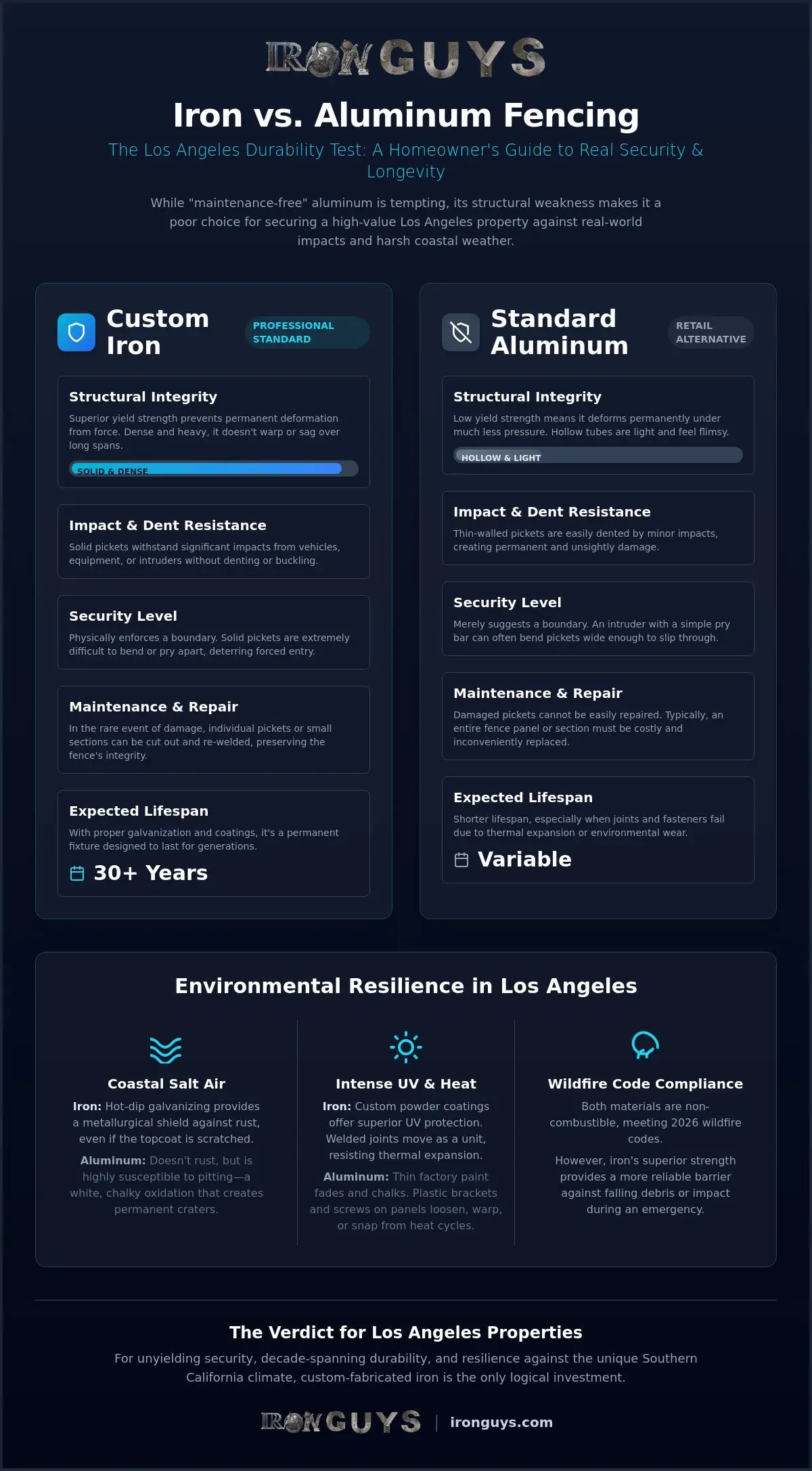
If you lean against a fence, you shouldn’t feel it give. Most mass-produced aluminum fences are little more than hollow tubes held together by friction and small screws. When we discuss the durability of custom iron fences, we’re talking about a level of structural integrity that aluminum simply cannot match. Iron is denser, heavier, and significantly harder to deform. It’s the difference between a barrier that merely suggests a boundary and one that physically enforces it.
Yield Strength and Material Density
Yield strength is the technical term for the point where metal permanently deforms. For iron, this threshold is remarkably high. Historically, Wrought iron properties include a low carbon content that makes the material incredibly tough and resistant to snapping. Modern structural iron follows this legacy of resilience. Because iron is much denser than aluminum, it doesn’t warp or sag over long spans. You can feel this difference immediately. Tap an aluminum picket and you’ll hear a hollow, tinny ring. Strike a custom iron picket and you get a solid, dead thud. That sound is the evidence of a material that won’t rattle when the Santa Ana winds kick up or the ground shifts beneath your feet.
Resistance to Bending and Dents
Real-world durability is tested by everyday accidents. Think about a heavy lawnmower catching a corner or a delivery truck backing up just a few inches too far. A light tap that leaves a permanent, ugly dent in a thin-walled aluminum picket won’t even scratch the surface of a custom iron installation. Mass-produced aluminum is designed for easy shipping, which means it’s light and thin. This flimsiness is a security risk. An intruder with a simple pry bar can often bend aluminum pickets wide enough to slip through without making much noise. Iron pickets are solid. They don’t snap or buckle under localized pressure, making them the superior choice for high-value estates where security isn’t optional.
Weight is a massive advantage in the Los Angeles landscape. Our region deals with uneven hillsides and soil that moves. A heavy iron fence anchored in deep concrete footings acts as a stabilizer for your perimeter. It provides a level of wind resistance that lightweight aluminum can’t provide. This is why iron remains the professional standard for LA fence installation. We prioritize the durability of custom iron fences because we know a fence should be a permanent fixture of the property, not a temporary decoration that needs replacing after the first minor impact.
Environmental Resilience: LA’s Salt Air and UV Exposure
Los Angeles weather is a paradox. While the sunshine draws people to the coast, the combination of intense heat and salt air and UV exposure creates a brutal environment for metal. Property owners near the “Santa Monica Salt Line” often see their investments crumble within a few years if they choose the wrong materials. This invisible line marks where coastal mist carries corrosive salt miles inland, settling on surfaces and eating through standard finishes. Without the right protection, the durability of custom iron fences can be compromised, but the right preparation makes them nearly invincible.
Heat cycles also play a major role in fence longevity. Southern California’s temperature swings cause metal to expand and contract daily. This thermal expansion puts immense pressure on joints, welds, and gate hinges. Mass-produced aluminum panels often use plastic brackets or small screws that loosen or snap under this constant movement. Custom ironwork relies on deep, structural welds that move as a single unit, maintaining its alignment even after decades of LA summers.
Corrosion: Rust vs. Pitting
There’s a common myth that aluminum is “maintenance-free” because it doesn’t rust. While it’s true that aluminum doesn’t produce iron oxide, it’s highly susceptible to pitting and oxidation. In coastal areas, this looks like a white, chalky powder that creates permanent craters in the metal’s surface. We prevent this in our ironwork through a process called hot-dip galvanizing. Galvanization is the gold standard for LA iron durability because it provides a metallurgical shield that prevents oxidation from reaching the base metal. This multi-layered protection ensures that even if the topcoat is scratched, the underlying iron remains protected from the elements.
UV Protection and Color Retention
The SoCal sun is a specialized enemy. High UV levels act like sandpaper on low-quality paints used in retail fence kits. Within three to five years, a “jet black” aluminum fence often fades to a dull, chalky gray. We combat this by using architectural-grade powder coatings. Unlike standard liquid paint, powder coating is baked onto the metal at high temperatures, creating a hard, non-porous shell. This finish is specifically engineered to resist the bleaching effects of the sun, ensuring your property maintains its high-end curb appeal for the long haul. If you’re concerned about how your specific microclimate might affect your perimeter, it’s worth looking into professional ironwork solutions that prioritize these heavy-duty finishes.
Choosing the right material isn’t just about the first year; it’s about the thirtieth. The durability of custom iron fences shines when you realize the metal isn’t just standing there. It’s actively resisting chemical attacks from the ocean and radiation from the sun. By investing in galvanized and powder-coated iron, you’re choosing a barrier that stays black, stays straight, and stays secure regardless of what the LA environment throws at it.
Security and Impact Durability: The Hardware Reality
A fence that looks good but fails under pressure is just a decoration. True security is measured by how much time and effort it takes to breach a perimeter. When we evaluate the durability of custom iron fences, we aren’t just looking at how they stand up to the rain. We’re looking at how they handle a pry bar, a saw, or a vehicle impact. In a city like Los Angeles, your fence is your first line of defense, and it needs to behave like one.
Breach Resistance
Aluminum is a soft metal. A motivated intruder with a battery-powered saw can slice through a retail aluminum picket in seconds with minimal noise. Iron is a different animal. The durability of custom iron fences comes from the density of the metal and the permanence of the welds. Most mass-produced aluminum systems use small screws to hold the pickets to the rails. These mechanical fasteners are notorious weak points. A simple pry bar can pop them loose in a heartbeat. Custom iron is fused together through high-heat welding. This creates a single, unbreakable unit that doesn’t rattle, bend, or give way under manual force.
Impact resistance is another area where iron stands alone. Consider the risk of a delivery truck backing up or a car rolling in a driveway. Aluminum panels are designed to be lightweight for easy shipping, which means they crumple upon impact like a soda can. They offer zero resistance to a vehicle. A heavy-gauge iron fence, anchored deep in concrete footings, provides a physical barrier that can actually stop a slow-moving vehicle. This level of impact durability is why iron remains the gold standard for high-end security solutions in Los Angeles.
Load Bearing for Automatic Systems
High-traffic properties often require automatic gates to manage access. These systems put constant torque and stress on the fence’s hardware. Aluminum is often too light and flexible to stay true under the weight of a gate operator. Over time, aluminum gates begin to sag. This sag causes the motor to strain and eventually burn out, or it prevents the latch from aligning correctly.
- Structural Rigidity: Iron supports the weight of heavy-duty motors without warping.
- Welded Hinges: We weld hinges directly to the posts, preventing the “hardware creep” seen in screw-on kits.
- High-Cycle Endurance: Iron hardware is built to handle thousands of openings without losing its alignment.
When you invest in iron, you’re choosing a material that won’t fail when the hardware starts working. It’s about more than just the bars; it’s about the hinges, the latches, and the structural frame that keeps your security system functional for decades.
Maintenance vs. Longevity: The Real Lifetime Value
The biggest lie in the fencing industry is that aluminum is cheaper because it requires zero maintenance. While you won’t be painting aluminum, you will eventually be replacing it. Real value isn’t found in a low sticker price; it’s found in the durability of custom iron fences that outlast the mortgage. In Los Angeles, we see historic estates in neighborhoods like Hancock Park where the ironwork has stood for over 50 years. These fences aren’t just barriers. They are permanent architectural assets that have survived decades of heat, wind, and urban wear.
Maintenance Realities
All outdoor structures require some level of attention. The “maintenance-free” tag is often code for “unrepairable.” If a delivery truck clips an aluminum fence, the hollow rails buckle and the thin pickets snap. Because these are mass-produced panels, you can’t just fix a small spot. You usually have to tear out and replace the entire 6-foot or 8-foot section, which leads to mismatched colors as the new panel won’t have the same sun-fading as the old ones.
Iron is different. It’s a modular, welded system. Maintenance for iron is simpler than people think. A five-minute annual walk-through to check for scratches or hardware wear is all it takes. If a single picket is damaged, an expert craftsman can cut it out and weld in a new one. A quick touch-up with matching architectural-grade paint and the fence is as strong as the day it was installed. This repairability is a core component of the durability of custom iron fences. You’re investing in a 30-year to 50-year replacement cycle rather than a 10-year one.
Impact on Property Appreciation
In high-end Los Angeles real estate, curb appeal is a high-stakes game. Flimsy, rattling aluminum fences can actually drag down a home’s resale value. Buyers in the luxury market expect materials that suggest permanence and security. A custom-fabricated iron fence signals that the property is well-protected and built with quality in mind. It’s an investment that pays for itself through property appreciation. You aren’t just buying a utility. You’re adding a structural feature that remains straight and true long after retail-grade products have sagged.
A heavy-duty iron perimeter creates a sense of peace of mind that lightweight metals can’t replicate. It provides the “heavy” look that defines Beverly Hills estates and modern architectural masterpieces alike. If you want a perimeter that adds real value to your estate, it’s time to talk to the experts at Iron Guys about a professional, heavy-gauge iron installation.
The Iron Guys Standard: Custom Fabrication for LA Estates
Most big-box retailers sell “iron” fences that are actually thin, mass-produced steel or lightweight aluminum kits. These products are designed for easy shipping and DIY assembly, not for the high-stakes security of a Los Angeles estate. At Iron Guys, we explicitly avoid these retail-grade materials because they compromise the durability of custom iron fences. When you choose custom fabrication, you’re opting for a barrier built to your property’s exact specifications, using materials that a retail store simply doesn’t carry. We treat every project as a piece of functional art that must perform under pressure for decades.
Why Custom Fabrication Wins
The difference starts with the raw metal. Retail kits often use 16-gauge or even thinner 18-gauge tubing. These are easily dented and offer very little resistance to a determined intruder. We utilize heavy-duty 11-gauge iron as our standard for high-security perimeters. This thickness provides a massive increase in structural rigidity and impact resistance. We don’t rely on spot welds or plastic brackets to hold your fence together. Every joint is secured with full-seam welding, creating a metallurgical bond that won’t rattle or break. This level of craftsmanship is essential for complex architectural iron works where the design must be as strong as it is beautiful.
Our finishing process is just as rigorous. To ensure your fence survives the LA salt air, we utilize a multi-stage approach. Every custom piece undergoes a hot-dip galvanizing bath, followed by an architectural-grade powder coating. This creates an airtight seal that prevents rust from the inside out. While a retail kit might look good for a year or two, our process ensures the durability of custom iron fences remains intact through decades of sun exposure and coastal mist.
Your Next Steps for a Permanent Boundary
Choosing the right perimeter is a significant decision for any property owner. It requires a balance of local code compliance, security needs, and aesthetic goals. Whether you are looking for the sleek lines of modern horizontal iron works or the timeless prestige of traditional ornamental designs, the process starts with a professional assessment. We evaluate your specific microclimate, from the salt spray of Malibu to the intense heat of the Valley, to recommend the right gauge and coating for your project.
If you’re tired of fences that sag, dent, or fade, it’s time to demand better. Scheduling a site consultation allows us to take precise measurements and identify potential security gaps in your current perimeter. As The Best Fence Company in Los Angeles, we don’t believe in one-size-fits-all solutions. We build permanent boundaries that protect your family and your investment. Contact us today to begin the process of forging a fence that will be the last one your property ever needs.
Build a Perimeter That Lasts
Your property deserves a boundary that doesn’t just look the part but performs under pressure. Aluminum might offer a lower initial price point. It simply can’t compete with the structural yield strength and impact resistance of heavy-gauge iron. We’ve seen how the Los Angeles climate demands superior coatings like hot-dip galvanizing to prevent the pitting and oxidation that ruins retail-grade metals. When you invest in the durability of custom iron fences, you’re choosing a permanent architectural asset that increases property value and provides genuine security.
Don’t settle for flimsy retail kits that sag or dent after a single season. We are licensed and professional LA installers who focus on custom-fabricated heavy-duty ironwork. We are also specialists in integrated automatic security gates to ensure your perimeter defense is seamless and reliable. Take the first step toward a fence that will be the last one you ever buy. Secure your Los Angeles property with a custom iron quote from Iron Guys. We’re ready to help you protect what matters most with craftsmanship that stands the test of time.
Frequently Asked Questions
Does iron always rust in coastal Los Angeles?
Iron only rusts if it’s poorly protected or uses low-quality primers. We use hot-dip galvanizing to create a metallurgical bond that shields the metal from the salt spray found in Santa Monica and Malibu. This process, combined with a baked-on powder coat, ensures the metal stays pristine for decades regardless of how close you live to the ocean.
Can an aluminum fence be used for high-security properties?
Aluminum is generally a poor choice for high-security applications because it’s a soft metal. It can be easily pried apart or cut with basic hand tools without making much noise. Custom iron fences are welded at every joint and use thicker gauges that resist forced entry and physical tampering much more effectively than lightweight alternatives.
Is it easier to repair an iron fence or an aluminum one?
Iron is much simpler to repair because it’s a modular, welded system. If a single picket gets damaged, we can cut it out and weld in a new one without disturbing the rest of the fence. Aluminum fences are usually sold in pre-assembled panels; if one part breaks, you often have to replace the entire section to maintain structural integrity.
How much stronger is iron compared to aluminum in a vehicle strike?
Iron is far superior in a vehicle strike because of its extreme density and weight. While aluminum crumples like a soda can under pressure, a heavy-gauge iron fence anchored in deep concrete footings can actually stop or significantly slow a moving vehicle. This structural mass is a key factor in the durability of custom iron fences.
What is the lifespan of a custom-fabricated iron fence?
A custom-fabricated iron fence can easily last 50 years or more in the Los Angeles environment. We still see historic ironwork in neighborhoods like Hancock Park that has survived since the early 20th century. The secret to this longevity is the quality of the initial fabrication and the use of heavy-duty 11-gauge iron rather than thin retail tubing.
Do automatic gate systems work better with iron or aluminum?
Automatic systems perform much better with iron gates because they don’t flex under the torque of the motor. The weight and rigidity of iron prevent the sagging and warping that often cause gate motors to burn out on lightweight aluminum systems. Iron hinges are welded directly to the posts, ensuring the alignment stays perfect over thousands of cycles.
Is powder coating enough to protect iron from salt air?
Powder coating is a high-quality finish, but it’s not a standalone solution for coastal areas. You need a base layer of hot-dip galvanizing to prevent rust from forming underneath the paint if it gets scratched. This two-layer approach is what guarantees the durability of custom iron fences against the corrosive effects of the LA marine layer.
Why is custom iron more expensive than retail aluminum kits?
Custom iron costs more because you’re paying for significantly more material and specialized professional labor. Retail kits use thin 16-gauge or 18-gauge tubes and weak spot welds to keep shipping costs low. Our custom work uses 11-gauge iron and full-seam welds, providing a level of security and longevity that mass-produced products can’t match.